Tampilkan postingan dengan label reading. Tampilkan semua postingan

Minggu, 30 Desember 2012

2012: The Year I Changed What I Read

If you've been reading this blog for a while, you probably know that reading and reviewing technical books has been a key aspect since the blog's beginning in January 2003. In fact, my first blog post announced a review of a book on Border Gateway Protocol (BGP).

Looking at my previous reviews, it's clear that my interest in reading and reviewing technical books expired in the summer of 2011. Since then, the only technical book I wanted to read and review was Michael W. Lucas' excellent SSH Mastery. MWL is such a great author that I read just about anything he writes, and I was interested in his first self-published technical work.

So what happened? Becoming CSO at Mandiant in April 2011 contributed to my changing interests. Since that time I've spoken to almost a hundred reporters and industry analysts, and hundreds of customers and prospects, answering their questions about digital threats and how best to live in a world of constant compromise. (I listed some of the results of talking to the reporters on my press page.)

For me, the most interesting questions involved history, political science, and public policy. Probably not be accident, these are the three subjects in which I have degrees.

Accordingly, I bought and read books to add the historical, political, and policy content I needed to balance my technical understanding of the threat landscape. I also read a few books based purely on personal interest, without a work connection.

I thought you might want to know what these books were, despite my lack of interest in reviewing them at Amazon.com.

The books on Chinese topics included:

Of these five, the first was probably the most interesting. The way Chinese intelligence agencies work today appears very much the same way that the author described them almost twenty years ago.

I read three books on intelligence and Russia:

Of these three, the first was exceptional. It combined a history of the US with a history of intelligence through the end of Bush 41's term.

Finally, I read two other books; one related to security, and one completely unrelated:

The first was Bruce Schneier's latest, which I found largely interesting. I recommend reading it, because it may convince you that all the technical safeguards our industry pursues contribute probably less than 10% of the risk mitigation we need in the real world.

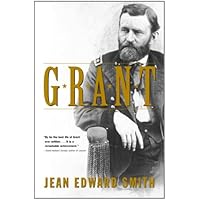
The second was another biography of my favorite historical figure, US Grant.

I'm trying to finish Tim Thomas' latest book, Three Faces of the Cyber Dragon, by the end of tomorrow, as well.

In my last post of 2012 I'll announce my Best Book Bejtlich Read in 2012 winner.

Minggu, 14 Agustus 2011

Book Reviews vs Impressions

I've been reading and reviewing technical books at Amazon.com since 1999, and trying to meet reading goals since 2000. Most of you know that I only review books that I read, unlike some of the people who post "reviews" at Amazon.com. I personally don't care to read "reviews" by people who don't read the books. What's the point?


However, I believe there is room for commentary on books, where I explicitly state that my reactions are based mainly on impressions and not thorough reading.


After looking at my personal reading list several months ago, I decided to not read some books thoroughly enough to merit a full review. One of the techniques I adopted was to take a book on a cross-country trip (IAD to LAX, for example) and read as much as I could, or as much as interested me, during those 4 to 6 hours.


During that time I would record notes, just as I do when writing book reviews. Unless I complete the book, I will not turn those notes into a proper Amazon.com book review.


Instead, I will post a new category of description, impressions, to this blog. These impressions will let you know what I think of a book based on paying attention to the areas that I find intriguing (if any).


I plan to use this approach with books outside my core areas of interest. For books within my core areas of interest, I will read and review them per normal.


None of these impressions candidates will qualify for my annual Best Book Bejtlich Read award.


For those not familiar with my reading approach, these reading posts might be helpful.


Jumat, 01 April 2011

Answering Questions on Reading Tips

A few of you asked questions via Twitter or comments on my All Reading Is Not Equal or Fast post, so I'll try answering them here.

When you review a book that was less than perfect or heck even one that was perfect could you also suggest some alternatives?

I'll be honest. That could be more work than I'm willing to do in a free forum like Amazon.com and this blog. Sometimes I mention alternatives because they're fresh in my mind and I like the other options. Always mentioning alternatives can be a real chore. If I wrote reviews for formal publication I would do that. Otherwise, I recommend subscribing to my Amazon.com review RSS feed and staying current with my reviews.

Where do you find the time to read the books? After family-time, work time and sleep-time..at what time of the day do u read and how much time do you invest? I keep trying to read books but I read 2-3 pages per day at night...thanks!

When work is really busy, I probably read the most when on the road. I try to get to airports early, so I could have 30 to 60 minutes at the gate. On the flight I hardly ever watch the movie(s) or work on a computer. I pretty much always read a technical book or read The Economist. Planes are especially good for concentrating my attention because I have no alternative and no distractions!

When I don't travel, I like to make some time early Saturday and Sunday mornings. I might also read a little at night, when my wife does the same.

Also, be prepared to read. Think one book will keep you busy on a trip? Take two. What if you're stuck at the airport, etc.? Whenever I take mass transit, I take something to read with me. The same goes for any time I expect to wait somewhere, like a doctor's office, before a meeting, and so on. This little stretches of time add up. And, if you face an unexpected delay, the little stretch becomes a reading-productive big stretch.

How do you maintain your list of books to read throughout the year? Do you look at upcoming books from specific publishers, books referenced in conferences and presentations, does Amazon offer pre-order recommendations and reviewer copies? How do you prioritize such a list?

Every once in a while I access this Amazon.com search page and do a keyword search for computer security terms, ordered by publication date.

I review the results and concentrate on titles from the mainstream publishers like Pearson imprints (Addison-Wesley, etc., including Cisco Press), No Starch, Wiley, Osborne/McGraw-Hill, Apress, O'Reilly (including Microsoft Press), Wrox, and Syngress. I never read Auerbach (sorry guys). I pretty much avoid everything else. You have to publish something extraordinary to catch my attention otherwise. Examples include books on FreeBSD or other BSD topics.

This method usually catches all books I care about in the next 9-15 months. I am rarely surprised, but that can happen! As a backup I subscribe to the blogs of major publishers who provide feeds on upcoming books (hint to publishers who do not do this -- you should!)

If I know and like the author already, I'll add the book to my Amazon.com Wish List immediately. I assign a priority based on how many months until the book will be published. I use Highest for published books and Lowest for books the farthest in the future.

Next I add books to my formal reading list. I usually have a queue stretching 9-12 months. My goal since probably 2000 or 2001 was to finish a calendar year having read all books available on my list, but it's never happened! (Will this be the year??)

My current list is more or less grouped by themes. I order the books based on the knowledge or familiarity I expect to need in order to understand the book. Hence, my current list shows books on C and Windows prior to books on exploitation develop and debugging Windows.

If a book seems really interesting, I'll put it on my schedule when the book is expected to be published. That may require rescheduling my reading. Not meeting my schedule can also force me to change the list.

The toughest part of my process involves seeing a book with an interesting title and subject written unknown author. Sometimes I'll take a leap of faith and add the book to my Wish List and reading schedule. Other times I'll wait until I can flip through it in the store. I always keep my Wish List and reading schedule synchronized, so you won't see me Wishing a book but not having it planned for a certain month.

How do you tackle/review books that are only distributed digitally?

I have yet to encounter this problem but I expect to at some point in 2012. I imagine by that time I'll just read the new book on an iPad or similar. I'll probably rely on note-taking on a separate piece of paper.

Thank you for your questions!

Kamis, 31 Maret 2011

All Reading Is Not Equal or Fast

Four years ago I posted Reading Tips, where I offered some ideas on how to read technical books.

Recently I've received emails and questions via Twitter on the same subject.

In this post I'd like to offer another perspective. Here I will introduce different "types of reading." In other words, I don't see all reading as equal, and what some people might call "reading," I don't consider to be reading at all!

After reading this post you may find you can adopt one or more (or really all) methods in your own knowledge journey.

The key to this post is to recognize that different types of reading exist, and you have to decide how you are going to approach a book, article, or other printed resource.

My list follows.

  • Proofreading is a very intense activity where the reader scrutinizes every aspect of a book. The reader pays attention to technical accuracy, grammar, production value (quality of screen captures, etc.) and all other customer-facing elements. This is usually a paid activity because it can be very demanding and time-consuming!

    I doubt most people find themselves in this situation, but I have been hired in the past to do this sort of work.

  • Reading for correctness is a subset of proofreading where the reader focuses on the accuracy of the written material.

    For example, is the author correct when he says the TCP three way handshake (TWH) is SYN ACK -> SYN ACK -> ACK? Wrong! (True story.) Here the reader is trying to see if the author knows what he is talking about. I usually enter this mode when I smell blood in the water. In other words, when I encountered the wrong TWH in a book years ago, I continued hunting errors until I was mentally exhausted.

    This is an unpleasant form of reading reserved for error-prone books. Once an author proves he or she knows the material I usually don't enter this mode. I only read for correctness as preparation to write a book review of a technically inaccurate book.

  • Memorization is another intense reading form, usually reserved for academic classes. If you've had to study for a biology test, you've probably read for memorization purposes. If reading for memorization, I will likely heavily mark the text and create independent, supplementary materials like flash cards. Yes, on real index cards! The act of writing the material helps activate other areas of the brain to memorize information.

    Thankfully I haven't had to do this sort of reading in years, or at least not regularly. I have had to memorize information for amateur radio license tests, and I like creating flash cards for that information.

  • Reading for learning is one of my common modes. With this approach I mark up a text (generally underlining or bracketing key terms and sections) and add comments or questions in margins.

    You might think the previous (and possibly the subsequent) reading modes are all about learning too, but simple learning for me is a more relaxed endeavor compared to memorization or correctness.

    The goal of learning is to be able to remember a subject, preferably well enough to at least describe it (but not teach it) to a third party.

    Reading for learning is as fast as you are able to absorb material.

  • Reading for practice is closely related to learning, but it involves material that has an operational aspect. For example, reading a programming book for practice, for me, involves trying the code examples, and even better trying the sample exercises.

    Practice is a more active form compared to learning. With learning I might be able to explain a pointer, but with practice I could write a program using one.

    Due to the hands-on manner, this is a slow form of reading.

  • Reading for familiarization is another one of my more common reading forms. Here I am just trying to understand the author without necessarily planning to implement his or her concepts in real life. For example, I plan to read a book on Windows internals in April, but I do not plan to become a Windows kernel programmer.

    Reading for familiarization is probably the fastest way to read a technical book and still derive value from it. I may or may not mark up a book for familiarization purposes.

  • Reading for reference starts to enter the gray area of possible "fake reading." If you only read a few sections or chapters of a book, have you really "read it?" For example, I've relied on the massive book Unix Power Tools, but because I've only referenced parts of it, I've never formally reviewed it.

    In my opinion, unless you heavily reference a book over time, you're not really reading at the level the warrants a review.

  • Sampling is not reading. Top Amazon book reviewer frauds, this means you. Looking at the front cover, back cover, index, table of contents, and a few sample pages doesn't make you qualified to write a book review. The sorts of people who write more than a few book reviews per day are the fakers who consider "sampling" to be "reading."

  • Reading for entertainment is not generally an approach I take with technical books! Sure, I enjoy them, but it's not like reading a classic fiction book. When reading a nontechnical work, I tend to devour pages. I'm not sure if that's good or bad, but it's exceptionally fast since the emotional component engages additional brain components that would allow me to later describe the content should I wish to do so.


How does reading for reviews fit in? In my view, as long as you're not "sampling" or reading for reference, any of the methods above qualify for writing a review. I suggest adding one component to your reading process to assist with review writing: keep a separate notebook and take notes as you read. Be very specific, e.g., "p 121 had this quote... etc." The more notes you take, the easier your review will be to write.

So what does this mean if you want to know "how does Bejtlich read so many books?" The answer is to decide just how you want to read a book. When I read a book on C or Windows Internals in April, I will likely be reading for familiarization. I don't plan to be a C coder or Windows developer, but I do want to be conversant in certain topics. If I get really motivated I will turn to my PC and try some examples. (In fact, I'll probably do that for a book on coding for Windows, since I've never done that before.)

What this means is that I, reading for familiarization, will probably read faster than someone else reading for practice, or memorization, or another time-consuming purpose. It all depends on your goal! On another day I may be reading for practice because I really want to know more about a topic, and then I'll be slower and more engaged.

Incidentally, the more you read, the faster you will likely become. I don't think improving your reading is limited to children, either (although my daughters are pretty scary in terms of speed).

Don't overdo it though. I would not be surprised to learn that chemical reactions are involved with reading, especially the more intense learning modes. In some cases I can feel my ability to absorb material shutting down, and at that point there is really no reason to continue. Take a break.

I also advise against reading in bed, although this is a truly personal opinion. For some people, it works great. I don't make it past five minutes!

If you have questions on this post, please comment here. I have to moderate everything so it may take me a while to notice them. Thank you.

Minggu, 27 Mei 2007

4000 Helpful Votes at Amazon.com

Last week the "Helpful Votes" count for my Amazon.com reviews reached the 4,000 count. I hit 3,000 in January 2006 and 1,500 in December 2003. Since reaching the 3,000 mark I've read and reviewed 55 additional books. Thank you to everyone who votes my reviews "helpful."

If you want to see what I have on my shelf and plan to read next, please check out my reading list. If you want to see the books I hope to see soon, please visit my Amazon.com Wish List.

If you want general recommendations read my Amazon.com Listmania Lists. In 2005 Bookbool published my favorite 10 books from the past 10 years.

My reading pace has slowed since becoming an independent consultant and father of two, but I try to read when flying hither and non.

Senin, 01 Januari 2007

Reading Tips

Happy New Year to everyone. I've received some feedback on my 1720th post, Favorite Books, mainly questions about my ability to read so many books in one year. I have no secret knowledge or techniques, but I would like to share what works for me.

First, I think it's important to recognize my situation. Some of you will have more time available, and others will have less. I am married with two small children. I run my own company (TaoSecurity). I do not have a daily commute although I do travel out-of-state several times each month. I do not watch much TV, and the TV I do watch is recorded on my TiVo.

Second, the advice I give assumes you want to make the most of your reading time. You want to read as many books as possible while retaining as much as possible. You don't want to use any gimmicks like speed reading, etc. (I do not use any of those "techniques." I don't think tricks like reading down the center of a page work very well for tech books, especially.)

  • Make a plan. Set some goals. Do you want to read one book per week, per month, per year? If you decided to just "read" you'll be less efficient. I try to read an average of one book on my reading list per week.

  • Read good books that interest you. One of the emails I received said "I find it difficult to read through a lot of books (especially on security due to dryness/boring) and wish there was a way I can fight through it more easily." There is no way to quickly read through boring books. If you run into a book in your reading stack that bores you, move it aside, fast. I fell into that trap a few times last year. You'll see huge gaps in my reviews where I got stuck looking at a boring book. I was so demotivated I stopped reading rather than push the book aside.

  • Read at least a few pages every day. Even if you only read two pages per day, you'll read two average size books per year. I sometimes fall into the trap of only wanting to read in "big chunks," where I won't read if I don't have a free 30 minutes or so. Too many days of waiting for big chunks of free time turn into a week, then a month, and then you've read nothing all year! Additionally, you may find it helpful to "surge" every once in a while. Sometimes I will read several books in a row over the course of a few days. Be careful with this approach -- it's easy to burn out fast and not want to start reading again.

  • Make time to read. You'll have more success if you think about the time of day you hope to read. Sometimes I wake up much earlier than my family and read. Other times I stay up late after they are asleep. Since I work for myself, sometimes I use part of my work day to read. If you are a security or technology professional, reading should be part of your work day. I have no idea how management can expect tech operators to stay current and effective without expanding our knowledge. Every company should have a budget for a tech library for its IT staff and recognition that spending some portion of the work day reading (30 minutes would be good) is a cost-effective way to build a forward-thinking tech force. Managers who discourage reading are idiots.

  • Read interactively. When I read a tech book, I use a template like the one pictured at right. It's basically a ruler, but I've had it since I studied architecture in high school. (That's correct -- back then we were just starting to use Apple computers for CAD, so most of the time we drew everything by hand!) When I read something interesting, I underline it. I haven't used highlighters since college; I think they are messy, they often fade, and they don't reproduce well if you want to photocopy or scan a page. I make notes in the margins. I draw small triangles next to the most important points, and triangles with check marks inside for especially significant ideas. When I finish a book I thumb through it and look at my triangles to refresh my memory. When possible I also read near my laptop so I can visit URLs mentioned in the book. I also take notes on a separate pad that I use to produce my book reviews.


If you have any thoughts, please share them as comments.

Rabu, 22 November 2006

Three Seven-Book Lists for Novice, Intermediate, Advanced Readers

I continue to receive feedback and questions on my No Shortcuts post. One of you prompted me to write three new Amazon.com Lists, organized thus:

For the civilians out there, that's novice, intermediate, and advanced. :) I listed seven books for each category to keep things manageable. One of the problems I encountered with the advanced list, especially, is that coding becomes a big part of the equation when one starts to consider "advanced" topics. I tried including "placeholder" books to give you the idea that you need coding background to make good use of a book like Unix Network Programming, Volume 1: The Sockets Networking API, 3rd Ed.

Please let me know if you find these lists helpful. Please remember that reading these 21 books in order will not take you from newbie to guru. Rather, these are books I think will help at each stage of your progression. I am also not claiming to be a guru by having selected seven advanced books. For example, I need to get more acquainted with coding in order to branch out into other areas of digital security.

Rabu, 26 Juli 2006

The State of the Security Book Market

At left is the juggernaut of the security book market -- Hacking Exposed. I mention this book because it came up in a discussion I had with someone in the publishing community today. She reported that the state of the security book market is somewhat weak. She worried that Hacking Exposed (published in late 1999) might have created a "bubble" in the security book market, and the bubble is now deflating.

I interpreted her comment to mean that publishers have flooded bookshelves with too many security books over the last 7 years. Publishers were chasing readership figures that were inflated by false expectations caused by Hacking Exposed.

Over the last 6 or 7 years I've read and reviewed almost exactly 200 technical titles, the majority of which are security books. That's a huge number, with at least half of those books being titles I thought would be good to read. You can begin to imagine the number of titles I've missed when I tell you that I concentrate on reading books from Pearson (Addison-Wesley, PHPTR, etc.), Osborne/McGraw-Hill, Wiley, O'Reilly and friends (Syngress, No Starch, etc.), and recently Apress. I basically never touch Auerbach and several other publishing houses.

If you look at my Amazon.com Wish List you'll see a large selection of mainly security titles that I would like to read, or at least look at before making a decision. Recently there seems to have been a lull in books arriving at my doorstep, which is great considering the depth of my reading list. I'm making progress again, and you can expect another review -- my 200th technical book -- shortly.

What is your opinion of the security book market? Here's a few questions.

  1. What subjects would you like to see discussed? Hot topics at the moment seem to be forensics, reverse engineering, and rootkits.

  2. How many security books do you purchase per year?

  3. About how much do you consider paying for a book? What price is too expensive?

  4. Do you have a favorite publisher? Why?

  5. What is the biggest problem with security books today?


If you're wondering, these are my questions. The publishing person referenced earlier has nothing to do with these questions. I'm just curious.

Finally, if you find my reviews helpful, please vote them as being helpful when you read them. I get no financial compensation from Amazon.com one way or the other, but I do keep notes while reading and I try to deliver something useful when done. Seeing my helpful vote count jump from the current 3376 for 207 reviews (8 are nontechnical) might motivate me to update my Listmania Lists. :) Thank you!

Kamis, 26 Januari 2006

Additional Thoughts on Amazon.com Reviews

I received some good comments on my previous post about my Amazon.com reviews. A few people at Black Hat Federal yesterday asked similar questions, namely: "Why don't you post bad reviews? We think they are more helpful than good reviews."

First, let's consider the definition of "bad review." I've never given a book 1 star. I've only given a few books two stars. For example, this book was awful. It's also got the highest number of fake positive reviews I've ever seen. (Many are written by people who have only reviewed the author's books, which is an indicator of being planted by the author.) The author somehow got Amazon.com to reject my original review. In the second review (which is now posted), I restricted my comments to quoting outrageously bad technical details that neither the author nor Amazon.com could deny.

My reading and reviewing habits are usually contrary to posting bad reviews. I am not the typical "reviewer" who gets a free book from the publisher, skims the contents, looks at the back cover, and then posts a so-called "review." In almost every case I read the whole book, or at least enough of the book to ensure I cover the author's main points. (Sometimes I do skip material. For example, I am not going to read about compiling software using "./configure, make, make install" in a sys admin book.)

Therefore, reading and reviewing is a fairly serious time commitment. As a result my reading list is about 50 books deep now. Publishers send me dozens of books per year. 95% of the time I have already identified the ones I want to read by adding them to my Wish List. If you're a publisher and you want a book review, please first check that list. If your book is not on it, I will probably not ever review it.

Books sent to me by publishers that go unread are not sold on eBay. I give them away at conferences or classes. I gave about 30 books away at ShmooCon, with the hope that attendees read and review them.

Given this scenario, sometimes I do write three star reviews. That sort of assessment means I thought the book had potential, so I decided to read it. While reading, I became disappointed by the content or technical accuracy. In 2005, I wrote 26 reviews. Of those, four were three-star reviews. This is a good example. I hoped that would be a good book, but the material covered plus the technical inaccuracies really sunk it for me.

The books most likely to get a low review are those I personally purchase. I may buy a book because it seems very good on the surface. If while reading it I find errors or other problems, I will definitely provide a bad review. I will probably not read all of a bad book in this case. The fact that I paid for the book will make me feel better about reviewing a book I have not thoroughly read.

I do not enjoy writing bad reviews. As an author, I do not like seeing my books receive low reviews. Thankfully that has only happen infrequently, and in the most recent case I can cite personal problems with one reviewer. As an author I also know that writing a book represents committing a lot of time and effort. If a lousy book somehow manages to slip through the editing process, or if the publisher refuses to correct deficiencies despite being notified, then I am more likely to post a bad review.

In some cases I even dislike writing 4 star reviews, since I can tell the author spent a lot of time on the book. A book that is technically sound can still receive a four star review. I usually deduct stars for covering material that has appeared elsewhere. I am a proponent for publishing new material, and I am disappointed when I see one good book followed by a handful of copycats who provide little original material.

I welcome your comments on this issue.

Rabu, 25 Januari 2006

3000 Helpful Review Votes at Amazon.com

This morning my Amazon.com reviews "helpful votes" count hit 3,000. This means my reviews were considered "helpful" 3,000 times. (Conversely, 299 people thought they were not helpful. Sorry!) Thank you to everyone who answered yes to the question "Was this review helpful to you?"

I reported hitting the 1,500 mark in December 2003. Since then I reviewed 62 more books, but my reviewer rank has dropped from 336 to 390. On the positive side, my average number of helpful votes per review has risen from 12 (or 1,500 / 125 ) to 16 (3,000 / 187).

Competition is tough when many high ranking "reviewers" post several times per day, showing they only glanced at a book's contents and read the back cover. The person I have in mind when writing this, however, has received 13,236 votes for 2260 reviews. His vote-to-review ratio is less than 6, indicating his reviews are, on average, not that helpful. Justice, perhaps?

I've only just started reading and reviewing regularly again. Right now I'm enjoying Running IPv6, which is excellent. I'd like to thank all of the publishers who send books for review. I never sell them on eBay, nor do I receive money from publishers or Amazon.com to write reviews. I'm in it for learning and sharing word of good technical books.

Rabu, 04 Januari 2006

Syngress Replies to Book Content Posts

Last month I posted three stories about reprinted content in certain Syngress books. Andrew Williams, Vice President and Publisher for Syngress, was kind enough to provide the following reply to my stories.


Andrew Williams, Publisher for Syngress here. My apologies for not posting to this thread sooner. I took some time off around the holidays, and just found Richard's blog of this now.

Yes, as Richard points out, we have certainly published books where specific chapters are re-used/re-edited/re-printed from previous books that have complementary material. This is due in very large part to the fact that Syngress publishes a significantly larger number of (as well as more specialized) security titles than most other publishers. So, there are situations where we publish multiple books with a different focus into related areas. If you look at our security list, you'll see that we cover many topics in more detail than a lot of other publishers: See this link.

Topics where other publishers may just have a chapter in a book, we frequently have an entire book (or more). As a result, we at times find we have content that is relevant to one or more books that we are publishing. The Buffer Overflow book is a good example. That book is close to 400 pages covering exclusively buffer overflows. BOs don't receive anywhere near that type of coverage in any other book.

And, this is a VERY VERY VERY targeted audience. When we then publish a broader book covering BOs in addition to other types of exploits, etc. some of the more specific content from the book exlusively covering BOs is applicable to the new book.

When this situation arises, we can either include the relevant content from the previous book, or we can refer the reader to the previous book without including the content. If we choose the later, we are forcing the reader to either continue with the current book without providing them w/ material that is actually relevant. Or, they must then go and purchase the other book as well. We think our readers are better served by including the material.

Believe me; our intent is not to somehow slip this by our customers. As one of the posts pointed out, customers reading multiple books on similar topics will certainly notice instances where chapters may appear in multiple books. And, we are definitely not re-using chapters to fill out a page count. On the three books Richard mentions, we had to go back in on all 3 books midway through production to tighten up the design (fonts, margins, etc.) becuase the books were starting to run well over their target page counts. Each of those books could easily have been half again as long as they came out had we used just a standard design. Point being, we are not trying to pad the page count.

Even with all that said, we publish as much (and probably more) very original, timely, securuty content than just about any other publisher out there. And, I am not at all taking away from the other publishers. Richard's books from AW are unbelievably good, along w/ many of their other titles. Wiley is also publishing a lot of very good security titles these days. But, if you look at our entire security list, I think you'll see that we have as much breadth and depth of security content as just about anybody.

So, we're not trying to fool anybody and we're not trying to skimp on the content. In fact, each of these 3 books (as do all of our books) provide the reader with 4 free chapters from other, related books that can be accessed from our Web site. So in many cases, the reader is getting several hundred additional pages for the purchase price of the one book. And, they're not foced to go and buy an entire other book to get related conntent. We examine each book individually to determine if it delivers on its promise. Sometimes the best way to do that is by re-using good content that we have already written, edited, published, etc.

All that said. The last thing we want to do is publish from an ivory tower. I think anyone reading Richard's blog who has spoken or worked with me or any of our authors knows that we are pretty accessible and open to input, suggestions, comments, criticism, etc. from everyone in the community. My e-mail is andrew at syngress dot com. I'm at almost all of the security shows. And, I'm open to suggestions (or flames) people want to send my way.

Best,
Andrew Williams
Vice President and Publisher
Syngress Publishing

Kamis, 07 Juli 2005

My Criteria for Good Technical Books

I was recently asked if I would review an upcoming book. In my reply, I listed four criteria I use when making my review evaluations.

  1. Accuracy. If a book contains several large or numerous small technical errors, I will lower my rating. I may stop reading entirely if I lose confidence in the author's capacity to deliver reliable information. This is a problem if I am reading a book outside my core expertise.

  2. Originality. I really dislike reading books that cover material already published elsewhere. I do not mind some repetition if the result makes sense, but in most cases authors should just start covering new material. For example, I would prefer a new book on network attack and defense to avoid explaining TCP/IP. Authors: if a book explaining your introductory material already exists, cite that title and present your new material in your book. Brian Carrier's book is a great example of how to make me happy. He doesn't bother explaining security; he sets up the reader with citations and then starts explaining file systems. Awesome.

  3. Candor. I cannot stand books that claim to cover one topic and then completely fail to do so. I must name names here to make my point: Scene of the Cybercrime: Computer Forensics Handbook spends over 540 pages on generic security issues before finishing with two chapters on what can only loosely be called forensics. Check the Table of Contents to see what I mean. That book pales in comparison with Incident Response, 2nd Ed.

  4. Lack of implementation details. I like to hear good security theory and techniques. However, if the author doesn't tell me how to implement this advice, I question why he or she bothered to mention it. I do not demand examples of every scenario. For example, I become suspicious when I read a chapter titled "securing servers," but never see a single invocation of command line syntax. Some reviewers of my latest book want me to address networking configuration outside of Cisco-land. I don't have the time, expertise, or equipment to cover Juniper, Foundry, and so on, but my Cisco examples should make the point clear.

What makes you like a technical book? My favorite ten books of the past ten years are listed at Bookpool, and those ten meet my criteria.