Tampilkan postingan dengan label reviews. Tampilkan semua postingan

Minggu, 10 Maret 2013

Earn Money For Reading SMS - mGinger Review 2013

Dear Visitors today we are back with new online earning method by which you will earn money just for reading SMS. Yes! you heard it right, This is possible from an Awesome Service "mGinger".

mginger

What Actually is mGinger?

mGinger is being Run by Gingersoft Media Pvt. Ltd which is actually based in Bangalore,India. mGinger actually works on Advertising basis by which they send you daily one or two special deals, various different discount schemes and much more through SMS and E-mail. It has more than 4.5 Million Users currently with it.

How to Properly Signup on mGinger?

  • First of all, go to mGinger and Click on Sign-up
  • Now Fill out the Required information asked as shown in the screenshot below.

How to Properly Signup on mGinger?

Now on the Next Screen you have to verify your Mobile Number(you entered in the above registration form) for that you just need to give a miss-call on a "Toll Free No." shown their within 5 minutes of your registration,
You will get a text message on your mobile no. from which you gave that missed call, if you got that message then you are successfully verified your no, if you didn't get any message then wait for a while and you will probably get it.

How mGinger Actually Works?

1. SMS
  • mGinger will credited Rs 3 the moment you verify your mobile number.
  • You will earn Rs 0.20 for every sms you will receive.
  • You will earn Rs 0.10 for every sms your referred friend receives.
  • You will earn Rs 0.05 for every ad your friend’s referred friend receives.
2. Emails
  • As you verify your email id mGinger will credited Rs 1 to your account.
  • You will also get paid emails and will be credited Rs 0.10 each time you read a new one.
3. Referrals
  • mGinger will be paying you Rs 2 for each referral you add to your network.

mGinger Legit or Scam?

Many people have a thought in their mind that these all online money making techniques or home based jobs are totally fake and so referred them as Scam, but if it would be a scam then why the hell I would post an article here about this service. mGinger is legit, reliable and pays their members on time.

Screenshot Of My Earning With mGinger

Screenshot Of Earning With mGinger

Now in the end, I would Conclude by saying that don't think that this is very difficult thing to do, if it is difficult then why the hell we are studying? :P
Don't Mind Guys, I was just saying like that, just keep in mind that don't think that you will be able to refer many guys or not, just signup and start earning.

Visit daily for more online money making tips, also like us on facebook and stay updated.

Minggu, 30 Desember 2012

2012: The Year I Changed What I Read

If you've been reading this blog for a while, you probably know that reading and reviewing technical books has been a key aspect since the blog's beginning in January 2003. In fact, my first blog post announced a review of a book on Border Gateway Protocol (BGP).
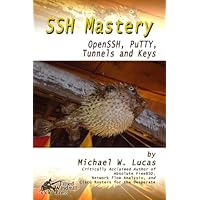
Looking at my previous reviews, it's clear that my interest in reading and reviewing technical books expired in the summer of 2011. Since then, the only technical book I wanted to read and review was Michael W. Lucas' excellent SSH Mastery. MWL is such a great author that I read just about anything he writes, and I was interested in his first self-published technical work.

So what happened? Becoming CSO at Mandiant in April 2011 contributed to my changing interests. Since that time I've spoken to almost a hundred reporters and industry analysts, and hundreds of customers and prospects, answering their questions about digital threats and how best to live in a world of constant compromise. (I listed some of the results of talking to the reporters on my press page.)

For me, the most interesting questions involved history, political science, and public policy. Probably not be accident, these are the three subjects in which I have degrees.

Accordingly, I bought and read books to add the historical, political, and policy content I needed to balance my technical understanding of the threat landscape. I also read a few books based purely on personal interest, without a work connection.

I thought you might want to know what these books were, despite my lack of interest in reviewing them at Amazon.com.

The books on Chinese topics included:

Of these five, the first was probably the most interesting. The way Chinese intelligence agencies work today appears very much the same way that the author described them almost twenty years ago.

I read three books on intelligence and Russia:

Of these three, the first was exceptional. It combined a history of the US with a history of intelligence through the end of Bush 41's term.

Finally, I read two other books; one related to security, and one completely unrelated:

The first was Bruce Schneier's latest, which I found largely interesting. I recommend reading it, because it may convince you that all the technical safeguards our industry pursues contribute probably less than 10% of the risk mitigation we need in the real world.

The second was another biography of my favorite historical figure, US Grant.

I'm trying to finish Tim Thomas' latest book, Three Faces of the Cyber Dragon, by the end of tomorrow, as well.

In my last post of 2012 I'll announce my Best Book Bejtlich Read in 2012 winner.

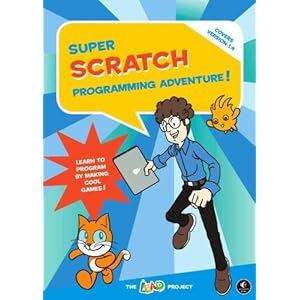
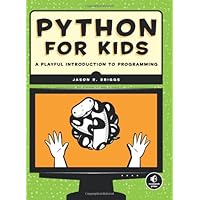
Five No Starch Books for Kids, Reviewed by Kids

No Starch was kind enough to send me five books for kids, which I asked my 6- and 8-year-old daughters to read. (I didn't need to "ask," really -- like my wife and I, our daughters think reading is something you have to be told "not" to do, e.g., "put the book down; we don't read at the dinner table.")

I did have to encourage my daughters to review the books. Although the older one writes book reports for school, she's not accustomed to writing reviews for books sent by publishers.

The five books, with links to the Amazon.com reviews, are:

I agree with my daughters: all five of these books are excellent. However, for readers of this blog who have kids, I would most strongly recommend the Python book. I would start with the book we previously reviewed, Super Scratch Programming Adventure!, and then see what your kid can do with Python.

Kudos to No Starch for publishing high quality books that teach kids skills they can use in the work place (programming), or for fun!

Senin, 26 November 2012

Premium Guide To Make Money With Adf.ly

Dear visitors today we are back with a new post on how to make huge money with adf.ly. Many of you might know about adf.ly. If you don't know what adf.ly here is a quick look on adf.ly and a guide on how to make huge money with adf.ly.

Premium Guide To Make Money With Adf.ly

What is adf.ly

Adf.ly is a free url shortening service. Many websites provide this services, but what difference with adf.ly is it pays you when any person visits your shorten url. You can share your url on facebook(by default facebook does not allows you to share adf.ly links but guide contains a method by which you can easily share links on facebook),Twitter, forums, personal websites and any social networking sites. They pay $4/1000 visitors which is not bad in any way as you are getting this for just sharing your shorten url. Their minimum payout is $5. You can request payment by various methods. They pay their user genuinely. Many users earn $200-500 monthly by just sharing the links.

Premium Guide

At the end of this post there is a download link for E-book on "How to make huge money with adf.ly". This Guide contains plenty of methods so I have not posted it here it is better you download the Guide and read all methods. You can earn unlimited with adf.ly after reading this Guide, if you have ability to do something in your life.

My First Payment's Proof

Adf.ly Payment Proof

 Signup for adf.ly acount.

If you don't have adf.ly account then join here

Download Guide-How to make huge money with adf.ly

Download adf.ly Guide

Be Social! Take a second share this post with your friends if it helped you. Also like us on facebook and stay updated with latest posts.
Visit us daily for more online money making tips.

Rabu, 14 November 2012

How To Transfer Your Android Phone Data To PC Without Cable

Hello Visitors today we are back with another review on an awesome android app. This app allow you to transfer your mobile data to your PC without data cable. If  you don't want to transfer data through data cable than it's perfect solution for you.


Steps to use Wi-fi File Transfer

  1. Download the wi-fi file transfer app from google play from this link or (pro version).
  2. Of coures your android.
  3. Computer/Laptop with Wi-Fi (Not Wi-Fi Modem).
  4. Turn your PC's wi-fi ON.
  5. Open you wi-fi on mobile.
  6. Now open  the application and click on the Start button.
  7. Now copy and paste the address on your computer.
    wi-fi file transfer pro
Wi-fi file transfer log
This is the best app available on Google Play. It has received 4.9 rating, so you must have this app. Now enjoy transfer of your mobile data to your PC without any cable.

Be Social! Take a second share this post with your friends if it helped you. Also like us on facebook and stay updated with latest posts.

Minggu, 11 November 2012

Best App To Backup And Restore SMS In Android

It is always better to backup you msg before Flashing or Rooting your android mobile. Because after flashing process your msg will be deleted. It's a common sense that you can restore your msg if you backed up your msg before flashing your android mobile. By using this app you don't need to backup your msg using old method by using PC Sync through data cable. As there are many app available for backup anad restore up msgs users get confused which one is better. So we have came up with this review on SMS Backup & Restore App.

SMS Backup & Restore

SMS Backup and Restore App

How to use it

  1. Download the SMS Backup & Restore app from google play from this link
  2. Install it
  3. Now open it.
  4. To backup your msgs click on backup give name for you backup and backup will start.
  5. To restore you msgs click on restore select the backup file which you want to restore. Click on OK and your msgs will be restored.
There is also many paid app available but this best and free app + Ad free also, so enjoy with this app.

Be Social! Take a second share this post with your friends if it helped you. Also like us on facebook and stay updated with latest posts.

Minggu, 14 Oktober 2012

Review of Super Scratch Programming Adventure! Posted

Amazon.com just posted a joint review by myself and my daughter of No Starch's new book Super Scratch Programming Adventure!. From the five star review:

I asked my almost-8-year-old to share her thoughts on Super Scratch Programming Adventure! She chose five stars and wrote the following:

"I think it's a very great book. I love the storyline, but my main concern is that I could not find a trace of the Super Scratch folder.

How hard is it to draw the Mona Lisa? I have Scratch version 1.4, and I found it difficult drawing Le Louvre.

On the flip side, I learned a lot. Who knew you could make Scratchy move with 1) arrow keys and 2) a medium sized Script?

I enjoyed watching the Magic Star Web change colors.

Overall, I think it's a very great book, and I highly recommend it to anyone who is interested in programming."

I agree that this is a great book. My daughter wanted to learn how to program a video game, and I thought it would be a lot more difficult. Shortly after starting to read and apply this book, she coded a video game!

I'd like to thank No Starch for sending us a review copy.

Selasa, 06 Maret 2012

Review of SSH Mastery Posted

Amazon.com just published my five star review of SSH Mastery by Michael W. Lucas. From the review:

This is not an unbiased review. Michael W. Lucas cites my praise for two of his previous books, and mentions one of my books in his text. I've also stated many times that MWL is my favorite technical author. With that in mind, I am pleased to say that SSH Mastery is another must-have, must-read for anyone working in IT. I imagine that most of us use OpenSSH and/or PuTTY every day, but I am sure each of us will learn something about these tools and the SSH protocol after reading SSH Mastery.

Minggu, 23 Oktober 2011

Review of America the Vulnerable Posted

Amazon.com just posted my five star review of America the Vulnerable by Joel Brenner. I reproduce the review in its entirety below.

I've added bold in some places to emphasize certain areas.


America the Vulnerable (ATV) is one of the best "big picture" books I've read in a long while. The author is a former NSA senior counsel and inspector general, and was the National Counterintelligence Executive (NCIX). In these roles he could "watch the fireworks" (not his phrase, but one popular in the intel community) while the nation suffered massive data exfiltration to overseas adversaries. ATV explains the problem in terms suitable for those familiar with security issues and those learning about these challenges. By writing ATV, Joel Brenner accurately and succinctly frames the problems facing the US and the West in cyberspace.

In this review I'd like to highlight some of Mr Brenner's insights and commentary.

On pp 65-7 he discusses "China's Long View... China had the world's largest economy for eighteen of the past twenty centuries. The two exceptions were those of America's youth and rise to power.... Like India, China does not regard Western domination as normal, and it does not suffer from an inferiority complex. China's chief national strategic objectives are to lift its population out of poverty and reestablish its place in the international order."

On pp 68-71 he explains the problem with the binary thinking of Westerners regarding war. China does not see war as a binary issue, where one is either at peace OR at war. "This kind of ambiguity is difficult for Americans to digest. We are direct and aboveboard, and we like to think others are like us -- or would be if given half a chance... [W]e suffer from a Western misconception in our law, religion, and policy that 'peace' and 'war' are opposites that cannot occur at the same time... Many Americans cling to this view, even though war has not been declared on the planet since 1945, while there have been hundreds of organized, violent, and militarized struggles in the interim."

On pp 71-3 he reiterates my point that the consequences of digital assault from China are indeed new, as well as the assault itself. "Our companies are under constant, withering attack. After the Google heist, companies [all emphasis is original] started asking the government for help in defending themselves against nations. This was unprecedented. We are now in uncharted territory... the boundary between economic security and national security has completely disappeared... While the scope of and intensity of economic espionage have assumed startling proportions, the 'traditional' espionage assault on our national defense establishment dwarfs anything we have ever before experienced."

On pp 75-77 Mr Brenner describes instances of espionage and consequences. "[Chi Mak] is the first spy (that we know of) through whom we lost critical military secrets and who was not a government employee. He will not be the last. If further proof were required, the case thus illustrates how thoroughly the functional boundary between the private sector and the government has dissolved... In essence, the PRC is leveraging the Pentagon's R&D budget in support of its own war-making capability."

Mr Brenner focuses on Chinese espionage in ATV; the following from p 78 is a good summary: "In contrast to the Russians, who are highly professional, the PRC often enlists amateurs from among a huge pool of sympathizers."

In the middle of the book Mr Brenner concentrates on the China threat by correctly identifying that the Chinese do not want a shooting war with the US. Rather (quoting Chinese military thinkers on p 118) "the objective in warfare would not be killing or occupying territory, but rather paralyzing the enemy's military and financial computer networks and its telecommunications. How? By taking out the enemy's power system. Control, not bloodshed, would be the goal... [Continuing on pp 126-7,] The Prussian Carl von Clausewitz, and Mao after him, had called war 'politics by other means.' [Strategists] Qiao and Wang seemed to be saying the reverse: Politics -- and economics and communications and everything else -- was war by other means. And while Clausewitz had preached the doctrine of the decisive battle, Qiao and Wang said there would be no more decisive battles."

Ch 9, "Thinking About Intelligence," is one of my favorite chapters because Mr Brenner examines the role of information and intelligence agencies in the modern world. On p 196 he makes a fascinating point: "To understand the future of the private sector's role in intelligence, we don't need a crystal ball. We can just as well look backward as forward, because we are experiencing a return to a historical norm." He then argues that the private sector is developing intel capabilities rivaling the government, which was the case prior to the creation of national agencies in the 20th century. On p 209 he recommends the following: "[T]he best way to run an intelligence agency is to focus tightly on the parts of the business that are really secret and separate them from the rest. You spend more money on open-source collection and analysis, and let them happen in controlled but unclassified space. You beef up counterintelligence. And you pay much more attention to the electronic handling and dissemination of information."

In the final chapter he offers some recommendations for improvement. I liked this statement on p 216: "If you wait for the incoming danger to reach you, you won't be able to defend against it. CYBERCOM solves this problem by letting the general in charge of defending national security networks use offensive tools outside his networks in order to know what's coming. To be blunt, espionage is an essential aspect of defense. To know what's coming, we must be living inside our adversaries' networks before they launch attacks against us." Note that is the traditional role of espionage, a model which the Chinese shatter by living inside our companies' networks, solely to steal our intellectual property.

I only found one small typo on p 194: The Yom Kippur War happened in 1973, not 2003.

Overall, I really enjoyed ATV. While I don't think the suggestions for improvement in the last chapter are sufficient to mitigate the threat, several of them are a good start. I highly recommend reading ATV at your earliest opportunity!

Minggu, 25 September 2011

Review of Robust Control System Networks Posted

Amazon.com just posted my five star review of Robust Control System Networks by Ralph Langner. From the review:

I am not an industrial control systems expert, but I have plenty of experience with IT security. I read Robust Control System Networks (RCSN) to learn how an ICS expert like Ralph Langner think about security in his arena. I was not disappointed, and you won't be if you keep an open mind and remember IT security folks aren't the target audience. After reading RCSN I have a greater appreciation for the problems affecting the ICS world and how that community should address the fragility of its environment.

Kamis, 28 Juli 2011

Review of Metasploit: The Penetration Tester's Guide Posted

Amazon.com just posted my four star review of Metasploit: The Penetration Tester's Guide by David Kennedy, Jim O’Gorman, Devon Kearns, and Mati Aharoni. From the review:

Metasploit: The Penetration Tester's Guide (MTPTG), is a great book about the Metasploit Framework. I first tried MSF in April 2004 (noted in one of my blog posts) and have since used it to test detection mechanisms, as well as simulate activity by certain threat groups. I've read MSF coverage in a few other books, but MTPTG really outdoes the competition. While I see areas for improvement to be addressed in a second edition, if you have any interest in Metasploit you should check out this book.

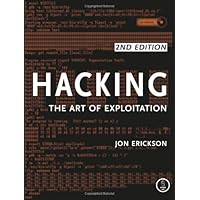
Review of Hacking: The Art of Exploitation, 2nd Ed Posted

Amazon.com just posted my five star review of Hacking: The Art of Exploitation, 2nd Ed by Jon Erickson. From the review:

This is the last in a recent collection of reviews on "hacking" books. Jon Erickson's Hacking, 2nd Ed (H2E) is one of the most remarkable books in the group I just read. H2E is in some senses amazing because the author takes the reader on a journey through programming, exploitation, shellcode, and so forth, yet helps the reader climb each mountain. While the material is sufficiently technical to scare some readers away, those that remain will definitely learn more about the craft.

Review of Gray Hat Hacking, 3rd Ed Posted

Amazon.com just posted my three star review of Gray Hat Hacking, 3rd Ed by Allen Harper, Shon Harris, Jonathan Ness, Chris Eagle, Gideon Lenkey, and Terron Williams. From the review:

Critical reviews are my least favorite aspect of my Amazon experience, but I believe readers expect me to be honest with them. Gray Hat Hacking, 3rd Ed (GHH3E) has a lot of potential, but it needs a reboot and a ruthless editor. I read and reviewed the original edition 6 1/2 years ago but skipped the 2nd Ed. This 3rd Ed (published in Jan 2011) features several exceptionally talented authors (such as Allen Harper and Chris Eagle), so my expectations remained high. Unfortunately, after finishing the book I had collected a pile of notes that I will try to transform into constructive commentary for a 4th Ed, which I would enjoy seeing!


Review of Ninja Hacking Posted

Amazon.com just posted my four star review of Ninja Hacking by Thomas Wilhelm and Jason Andress. From the review:

Ninja Hacking is not a typical digital security book. When I saw the title I expected the use of "Ninja" to be a reference to a style of digital attack. While this is true to a certain extent, Ninja Hacking is about actual Ninja concepts applied to the digital world. The book is an introduction to Ninja history and techniques, applied to the modern digital security context. That was not at all what I expected, but I found the result intriguing.


Review of Managed Code Rootkits Posted

Amazon.com just posted my five star review of Managed Code Rootkits by Erez Matula. From the review:

Managed Code Rootkits (MCR) is one of the best books I've read in 2011. MCR is a one-man tour-de-force through the world of malicious software that leverages managed code for its runtime. Prior to reading the book I was only vaguely aware of the concept and implementation. After reading MCR, I am wondering when we might see more of this technique in the wild. Author Erez Metula does almost everything right in MCR, and I strongly recommend reading it.

Review of Buffer Overflow Attacks Posted

Amazon.com just posted my two star review of Buffer Overflow Attacks, by James C. Foster, et al. From the review:

I read "Buffer Overflow Attacks" as part of a collection of books on writing exploit code (reviewed separately). I have to give credit to the author team for writing one of the first books on this subject; Syngress published BOA in 2005, when the subject received less published coverage. However, better books are available now if you want to learn the sort of material found in BOA.

Sabtu, 30 April 2011

Early Review of Ghost in the Wires

Kevin Mitnick was kind enough to send me a galley copy of his upcoming autobiography Ghost in the Wires. Amazon.com won't let me post a review yet, so I'll write what I would have supplied to the site.


In 2002 I reviewed Kevin Mitnick's first book, The Art of Deception. In 2005 I reviewed his second book, The Art of Intrusion. I gave both books four stars. Mitnick's newest book, however, with long-time co-author Bill Simon, is a cut above their previous collaborations and earns five stars.


As far as I can tell (and I am no Mitnick expert, despite reading almost all previous texts mentioning him), this is the real deal. Mitnick addresses just about everything you might want to know about. For me, the factor that made the book very unique was the authors' attention to detail. This sounds like it might have been a point of contention between the co-authors, but I found the methodical explanation of the social engineering and technical attacks to be relevant and interesting. Mitnick just doesn't say he social engineered a target; rather, he walks you through every step of the event! It's amazing, audacious, and in many cases beyond the pale.


One surprise for me was the amount of technical hacking Mitnick describes. He wasn't just crafty with a phone; he spent a lot of time at the keyboard executing technical exploitation of Unix variants. Interestingly, this may or may not include the so-called "Mitnick attack" whereby Tsutomu Shimomura's computer suffered the only documented TCP blind spoofing incident. In Ghost in the Wires, Mitnick says an Israeli hacker nicknamed JSZ wrote the code to implement the attack, and JSZ executed the Christmas Day 1994 exploitation of Shimomura's computer (p 326). Later on p 334, however, Mitnick notes the same attack worked against a different target (blackhole dot inmet dot com), so he may have executed that previously undocumented incident himself?


Ghost in the Wires also shares the human side of Mitnick's story. His description of solitary confinement and his anxiety of returning to those conditions seemed very real. They appear ever more relevant given recent treatment of Bradley Manning. One has to wonder about "cruel and unusual punishment" of those who are not convicted, such that they will sign plea deals just to avoid solitary confinement. Beyond prison issues, Mitnick's love for his family (especially his mother and grandmother) were clear throughout the book.


I very much enjoyed reading Ghost in the Wires, and I believe the majority of the computer security community would too.


Update: I posted this to Amazon.com.


Review of Windows Internals, 5th Ed Posted

Amazon.com just posted my five star review of Windows Internals, 5th Ed by Mark Russinovich and David Solomon, with Alex Ionescu. Microsoft Press provided a free review copy. From the review:

Windows Internals, 5th Ed (WI5E) by Mark Russinovich and David Solomon, with Alex Ionescu, is a remarkable technical achievement. I read the book to better understand Windows to improve my security knowledge. I am not a Windows programmer, but I thought WI5E would provide context for some of the exploit and vulnerability information I occasionally encounter. I absorbed as much of WI5E as I could, but quickly found the scope and depth of the material to be incredible. While there is no substitute for reading source code, the explanations in WI5E come close! So many aspects of Windows are described, to such a deep level, that you might find yourself wanting to use Windows just to see WI5E's descriptions at work.


Review of Windows System Programming, 4th Ed Posted

Amazon.com just posted my five star review of Windows System Programming, 4th Ed by Johnson M. Hart. Addison-Wesley provided a free review copy. From the review:

I read Windows System Programming, 4th Ed (WSP4E) by Johnson M. Hart after finishing Windows via C/C++, 5th Ed (WVCP5E) by Richter and Nasarre. While I liked WVCP5E, I found WSP4E to be the better book for the sort of understanding I was trying to achieve. I'm not a professional Windows programmer, but I wanted to learn more about how Windows works. Hart's book did the trick, especially for a person like me with more of a Unix background. If you want to better know how to program on Windows, and specifically recognize differences among using the C libraries, the Windows API, and Windows "convenience functions," WSP4E is the book for you too.

Review of Windows via C/C++, 5th Ed Posted

Amazon.com just posted my four star review of Windows via C/C++, 5th Ed by Jeffrey M. Richter and Christophe Nasarre. Microsoft Press provided a free review copy. From the review:

I will admit right away that I am probably not the target audience for this book, because I am not a professional Windows programmer. However, I am very interested in learning how Windows works, and Windows via C/C++, 5th Ed (WVCP5E) is one of the books that will help develop that expertise. Had I not also read Windows System Programming, 4th Ed (WSP4E) by Hart, I would have given WVCP5E 5 stars. Both are strong books, but WSP4E received 5 stars in a separate review. Still, I very strongly believe that WVCP5E by Richter and Nasarre is a must-read for anyone who wants to know more about Windows applications.